
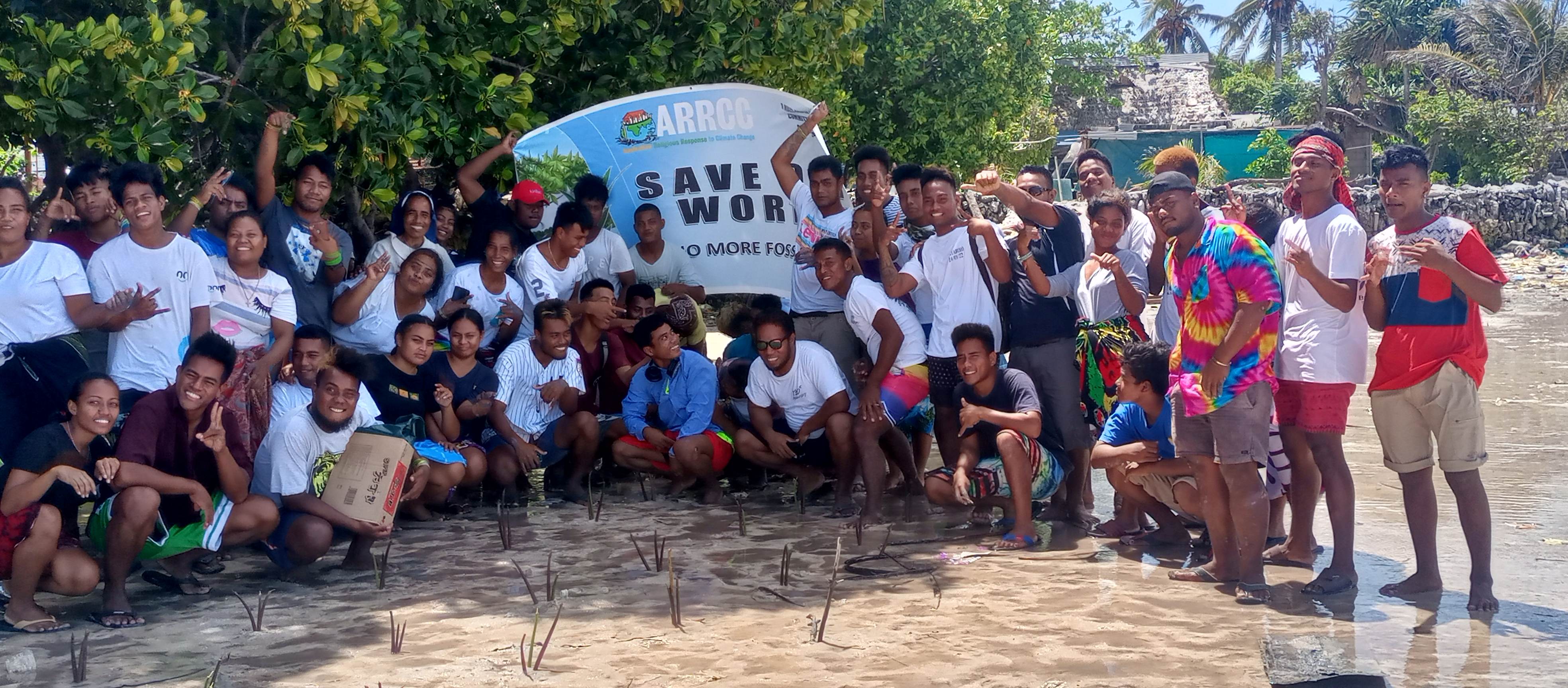
I-Kiribati Youth participants in Faiths 4 Climate Justice 2022
Dated 24 July, 2025
The following is a statement from Rev James Bhagwan, General Secretary, Pacific Conference of Churches (PCC), in response to the historic advisory opinion of the International Court of Justice.
“The earth is the Lord’s, and everything in it, the world, and all who live in it; for he founded it on the seas and established it on the rivers.” – Psalm 24 : 1‑2
Deep gratitude for Pacific youth
We begin by saluting the Pacific Island Students Fighting Climate Change. Your six‑year journey from a classroom idea to the Peace Palace has changed the course of international law. The PCC is privileged to have walked a small part of that voyage with you, and we are extraordinarily proud of what you have achieved for the whole creation.
Thanks to Pacific governments
We also honour Vanuatu and the wider Blue Pacific Continent for carrying this petition to the United Nations. Today’s unanimous Advisory Opinion proves that when the Pacific speaks with one voice, the world listens.
A watershed for climate justice
The International Court of Justice has ruled that failure to act on climate change may constitute an internationally wrongful act, exposing States to reparations claims. Crucially, the Court affirms that access to a “clean, healthy and sustainable environment” is a human right for present and future generations.
Ecumenical resonance
The World Council of Churches welcomes this moment as the day moral duty became legal obligation, and launches a Decade for Climate Justice Action urging governments to re‑orient policy towards ecological transformation.
Safeguarding the ocean – stop deep‑sea mining
The Opinion underscores every State’s duty to prevent transboundary harm. Deep‑sea mining—whether driven by profit or marketed as “critical minerals” for defence—would irreparably scar the blue heart of our planet. We therefore renew our call, echoed at last month’s UN Ocean Conference, for an immediate moratorium on all seabed‑mining activity.
Recognising the rights of nature
If a healthy environment is a human right, then rivers, forests, mountains, and the ocean must be recognised as rights‑bearing entities. Pacific Indigenous leadership is already blazing this trail:
-
In 2024, Māori, Tahitian, Tongan, and Cook Islands leaders signed He Whakaputanga Moana, a treaty granting whales legal personhood, so their suffering can be challenged in court.
-
Aotearoa‑New Zealand’s Te Awa Tupua Act 2017 has long recognised the Whanganui River as a legal person with enforceable rights.
These examples show how the Court’s language can be translated into statute. Pollution or ecological damage by any actor must trigger prosecution and full restoration.
Guided by the Tuākoi ‘Lei Declaration, PCC will now
-
Continue to Reweave the Ecological Mat – continue promoting development models centred on ecological well‑being and Indigenous wisdom.
-
Champion an Ocean of Peace – advocate that to be an Ocean of Peace, the Pacific must both be Nuclear Free and Fossil‑Fuel Non‑Proliferation Zone and a permanent regional ban on deep‑sea mining.
-
Advance rights‑of‑nature legislation – work with churches, civil society, and lawmakers to grant personhood to key ecosystems and impose strict liability for harm.
-
Stand with the vulnerable – support Loss‑and‑Damage claims, including Non-Economic Loss and Damage, and press for timely, adequate finance from historical emitters.
-
Embed youth leadership – continue to secure seats for young theologians and activists within PCC governance to keep their prophetic voice at the centre of our mission.
A call to conscience
The Court has spoken; now the family of nations must act. Let us heed the Tuākoi ‘Lei summons to good‑neighbourly love by protecting creation, repairing injustice, and embracing a just transition worthy of our children. The Pacific drum has sounded—may its rhythm guide the world towards an Ocean of Peace where peoples and planet flourish together.
#ICJ4ClimateJustice #StopDeepSeaMining #RightsOfNature #BluePacific


